


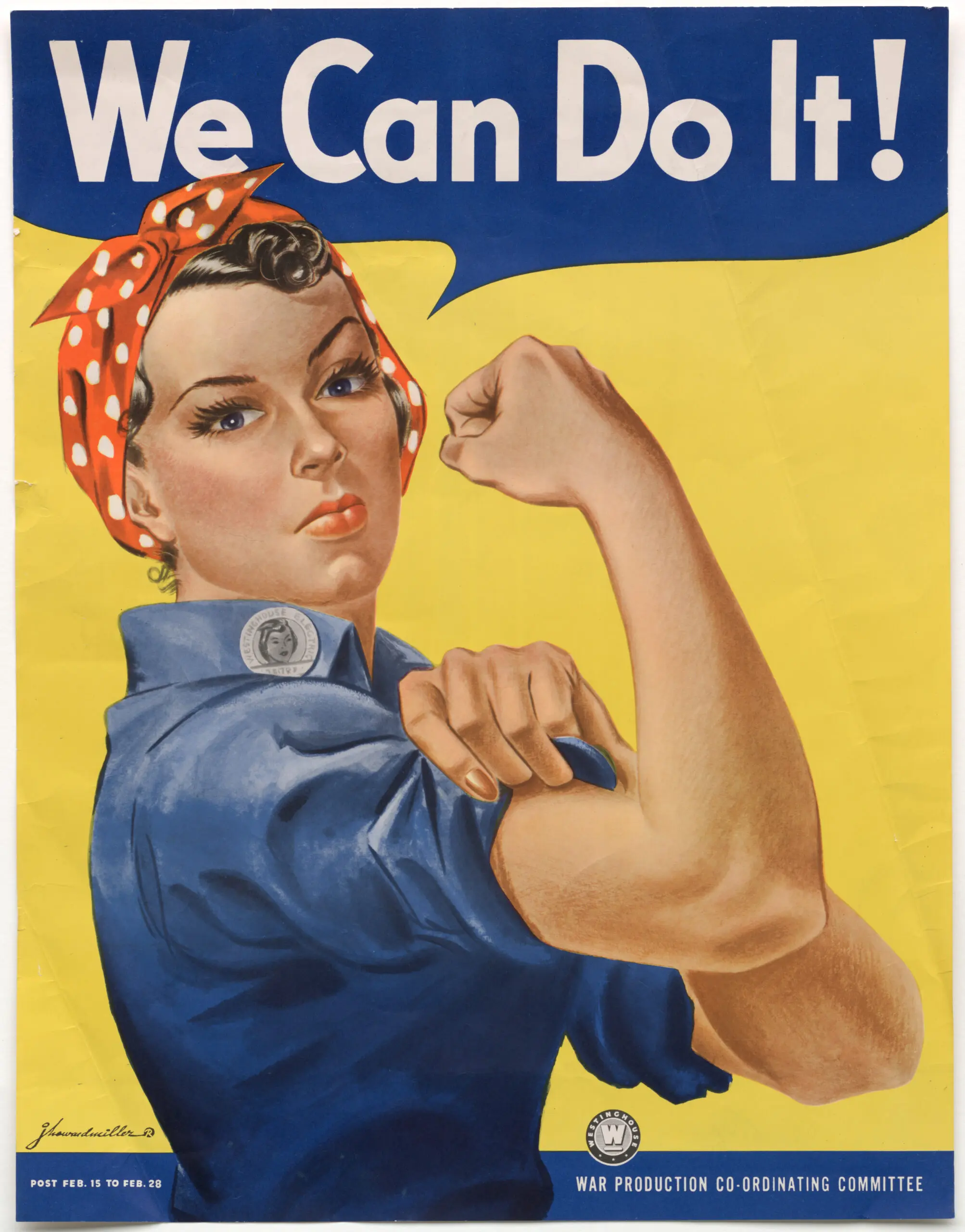
Women’s History Is Workforce History: A Look at How Women Have Contributed to Professions Through the Ages
March 1st marked the beginning of Women’s History Month, a celebration that’s grown from a week-long observance that started in 1978 in Santa Rosa, California, to a nationally designated month in 1987. Throughout the decades, we take this time to honor the myriad ways that women have contributed to our society, past and present. And their impact is certainly evident when you take a look at workforce development and how it has evolved over the past few centuries.
Women’s Work Before the Industrial Revolution
Despite enduring historical stereotypes that cast women as confined to the home while men worked outside it, women have long played a vital role in business and professional life. In addition to contributing to economic and commercial activity, most women were responsible for running their households—cooking, cleaning, and raising children, as well as producing textiles, managing budgets, organizing social functions, and supervising domestic workers. Much of this “invisible labor” went unrecognized and unpaid, but it was indispensable: without it, society could not have functioned.
Still, women have pursued professions in trade and commerce for centuries. They have produced and sold goods, made their names as merchants, and participated in professional guilds.
- Agnes Ramsey (14th century England) was a businesswoman and mason who was contracted by Queen of Isabella of France to construct her tomb
- Rose de Burford (14th century England) was a merchant who took over full management of her father’s wool and spice trade
- Catalina de Medrano (16th century Spain) was a businesswoman who supplied cloth to the monarchs of Spain
- Fygen Lutzenkirchen (15th century Germany) was the manager of a major silk trading house and now has memorials to her in present-day Cologne
- Nyai Gede Pinateth (15th century Java) managed a large-scale merchant business and had the office of master of the harbour
The Industrial Revolution Impact
Beginning in the late 18th century, the Industrial Revolution transformed opportunities for women in the workforce, with participation increasing rapidly—particularly during the 20th century. The advent of factories and mills, the growth of wages and salaried employment, and the expansion of skilled trade work created opportunities for women to seek paid work outside the home.
By the late 19th century, women represented a third of factory workers, two-thirds of teachers, and were widely employed in dressmaking and tailoring. But they were also working in more traditionally male-dominated trades like the iron and steel industry, sawmills, oil refineries, ship rigging, and stock herding.
In 1863, after years of research, economist Virginia Penny wrote The Employments of Women: A Cyclopædia of Woman’s Work, a compendium of occupations in which women were making their mark. Strikingly, in a book that’s nearly 500 pages, the industries untouched by the labor of women can be described in a few short paragraphs.
Penny dedicated the book to “worthy and industrious women in the United States, striving to earn a livelihood.”
The Modern Era of Working Women
For several decades after the Industrial Revolution, working outside the home remained largely the domain of young, unmarried women, who frequently left their jobs upon marriage. Beginning in the 1920s, however, married women became less likely to exit the workforce as the so-called “Quiet Revolution” gained momentum. Increasing numbers of women pursued education beyond high school and sought long-term careers. By the 1970s, women were building professional lives at every level across a wide range of industries, from medicine and law to IT and skilled trades.
Today, women continue to play a significant role in the skilled trades in America:
- Between 2014 and 2024, the percentage of women working in the field of transportation jumped from 15% to almost 22%
- As of 2025, women make up approximately 78% of healthcare workers, including 80% of dental office staff and 85% of home health care providers
- Currently women make up 11% of the workforce in the construction industry, up almost 10% since 2015
- Women account for nearly 30% of workers in the field of computer systems design and related services
According to Pew Research, the share of women aged 25-34 with a high school diploma who are working full-time is the highest it has ever been. They are the future of the workforce, making strides to learn and develop their careers and opportunities, driving decreases in household poverty over the past decade. The significant contributions of women to labor, employment, and the economy continue.
Leading the Change
The National Women’s History Alliance has chosen “Leading the Change: Women Shaping a Sustainable Future” as the theme for Women’s History Month 2026—a particularly fitting tribute. The more closely we examine history, the clearer it becomes that women’s achievements have played a crucial role in shaping modern-day progress. As women continue to forge new paths in career and workforce development, Ancora Training is proud to support and empower those efforts.