


The Growing Demand for Last-Mile Delivery Drivers
When we discuss trucking, a lot of times we default to thinking about long-haul truckers moving freight in semis across the country. But equally important are the drivers who handle the shorter routes within towns and cities. In fact, the need for last-mile drivers is growing; let’s take a look at why, and how someone can train to become one.
What Is a Last Mile Driver?
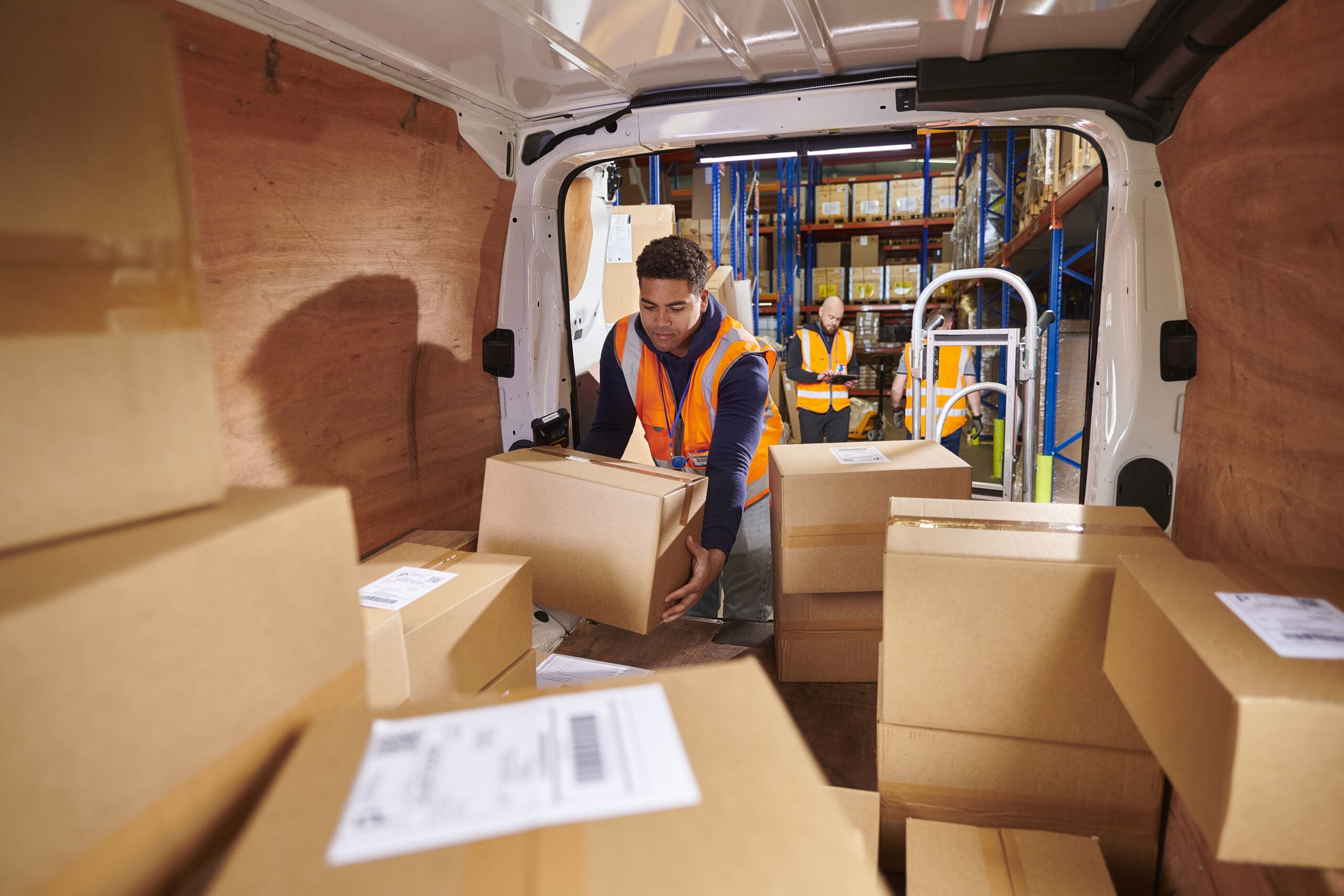
Last mile—also referred to as final mile—refers to the stage of shipping where a package goes from a transportation hub to its final destination. For example, when a person orders something from Amazon, it’s a last-mile driver who navigates the neighborhood roads to leave it on their doorstep. It’s a crucial stage of the process because it’s the customer’s most visible touchpoint and significantly influences their overall satisfaction.
Here’s a quick breakdown of the full shipping journey per DispatchTrack:
- An order is placed by a customer and enters a centralized system.
- The product is shipped from a central warehouse to a transportation hub.
- The package is assigned to a delivery driver based on the most efficient truck route for the location.
- Transportation hub staff scan and load the package into a delivery vehicle.
- The delivery driver brings the package to the customer and provides proof of delivery.
What Is It Like to Work as a Last-Mile Driver?
One of the biggest benefits for final-mile drivers is the flexibility in their job schedules, making the role an excellent fit for people balancing school, family, or other responsibilities. Many positions offer early morning, evening, or late-night shifts, allowing drivers to choose schedules that best suit their needs.
Most of a last-mile driver’s work hours are spent on the road, and that makes it a good fit for people who prefer an active job over being stuck behind a desk. Last-mile delivery drivers need to be prepared to work in a variety of weather conditions, including heat, cold, rain, and snow to get their packages to their destinations.
Most drivers follow what is sometimes called a “ring and run” approach, quickly dropping off packages and heading to their next stop before the customers even know they were there.
There are several different companies that hire last-mile drivers, too:
Big Box Retailers
Mega stores like Amazon, Target, and Walmart that offer home delivery all need final-mile drivers to get their products to customers in a timely fashion.
Delivery Services Partners
Amazon has trailblazed a Delivery Service Partner Program, signing contracts with small business delivery companies to get packages to customers faster.
Courier Services
These companies are less about transporting products and more about carrying VIP cargo like legal documents and medical specimens.
Expedited Freight Services
This is for businesses who need to get their product(s) between two points as quickly as possible, often because there have already been delays in shipping.
Why Is Demand for Last-Mile Delivery Drivers Growing?
The largest reason for today’s last-mile driver demand is ecommerce: digital retail orders delivered right to the customer’s front door. This rapid delivery model was already a growing sector even before 2020, but the COVID-19 pandemic dramatically accelerated its expansion as consumers turned to online shopping and delivery services for everything from groceries and restaurant meals to household essentials.
Since the pandemic, ecommerce has only continued to grow: online sales in Q4 of 2025 broke $350 billion for the first time in a single quarter.
This has launched a corporate arms’ race in terms of delivery speed. In 2026, customers aren’t used to waiting too long for their products to be delivered. Same-day delivery, two-day shipping, scheduled delivery windows—these are game changers that require millions of skilled last-mile drivers to make good on them.
How Does Someone Become a Last-Mile Driver?
Step One: Have a Diploma or GED
As a baseline requirement, most employers will be looking for people who have a high school diploma or GED. For adults that don’t already have these qualifications and need to complete their high school requirements, there are programs like Ancora High School that can help.
Step Two: Have a Valid Driver’s License
Anyone who wants to pursue last-mile delivery services will need to, at the very least, have their driver’s license from the state where they reside. Prospective drivers can search USA.gov to find state-specific information on obtaining or renewing their license.
Note: Having a relatively clean driving record can also help.
Step Three: Earn a Class B CDL
Not every delivery driver position requires a commercial driver’s license, but career-wise, it’s best to have a Class B Commercial Driver’s License (CDL) for access to more opportunities. Training for a CDL-B allows a person to drive single vehicles with a gross weight of 26,001 pounds or more, which includes straight trucks and box trucks (delivery trucks).
The Federal Motor Carrier Safety Administration (FMCSA) outlines three basic steps to getting a CDL, which provide a helpful roadmap for finding a CDL career training program.
What Else Is Needed to Be a Last-Mile Driver?
There are some “soft skills” that can contribute to a successful career as a last-mile driver, including things like:
- A strong sense of navigation and direction
- Good time and schedule management
- The ability to think on their feet and solve problems quickly
- Strong attention to detail and concentration
- Good physical health and the ability to lift and carry potentially heavy packages
- A recognition of the personal responsibility and integrity involved in package delivery
Putting People in the Driver’s Seat
Commercial drivers keep our economy afloat, and last-mile drivers play a critical role in that process—a role that continues to grow and expand with the huge rise in ecommerce. CDL training provides in-demand, marketable skills that these drivers need to fulfill industry jobs. Ancora Training partners with organizations to develop career training programs—including CDL training programs—that equip learners with practical skills and lasting benefits. Contact our team to learn more about the career-advancing courses we offer.
Tags: CDL last mile drivers