


7 Truck Driver Safety Statistics Every Employer Should Know
For companies that rely on commercial truck drivers, safety isn’t just a compliance requirement. It’s a business investment that directly impacts employee well-being, operating expenses, insurance costs, and overall profitability.
Every preventable truck-related incident can have a positive effect across an organization. Conversely, vehicle repairs, insurance claims, missed deliveries, employee injuries, legal expenses, and lost productivity can quickly turn one incident into a significant financial setback.
The latest national truck driver safety statistics highlight why employers cannot afford to overlook driver training, vehicle maintenance, and proactive safety management. In this article, we identify seven statistics and what they mean for employers. Whether your organization operates a small fleet or manages hundreds of commercial drivers, this knowledge can help you make informed decisions that protect your employees, the public, and your bottom line.
1. More Than 5,300 People Died in Large Truck Crashes in 2024
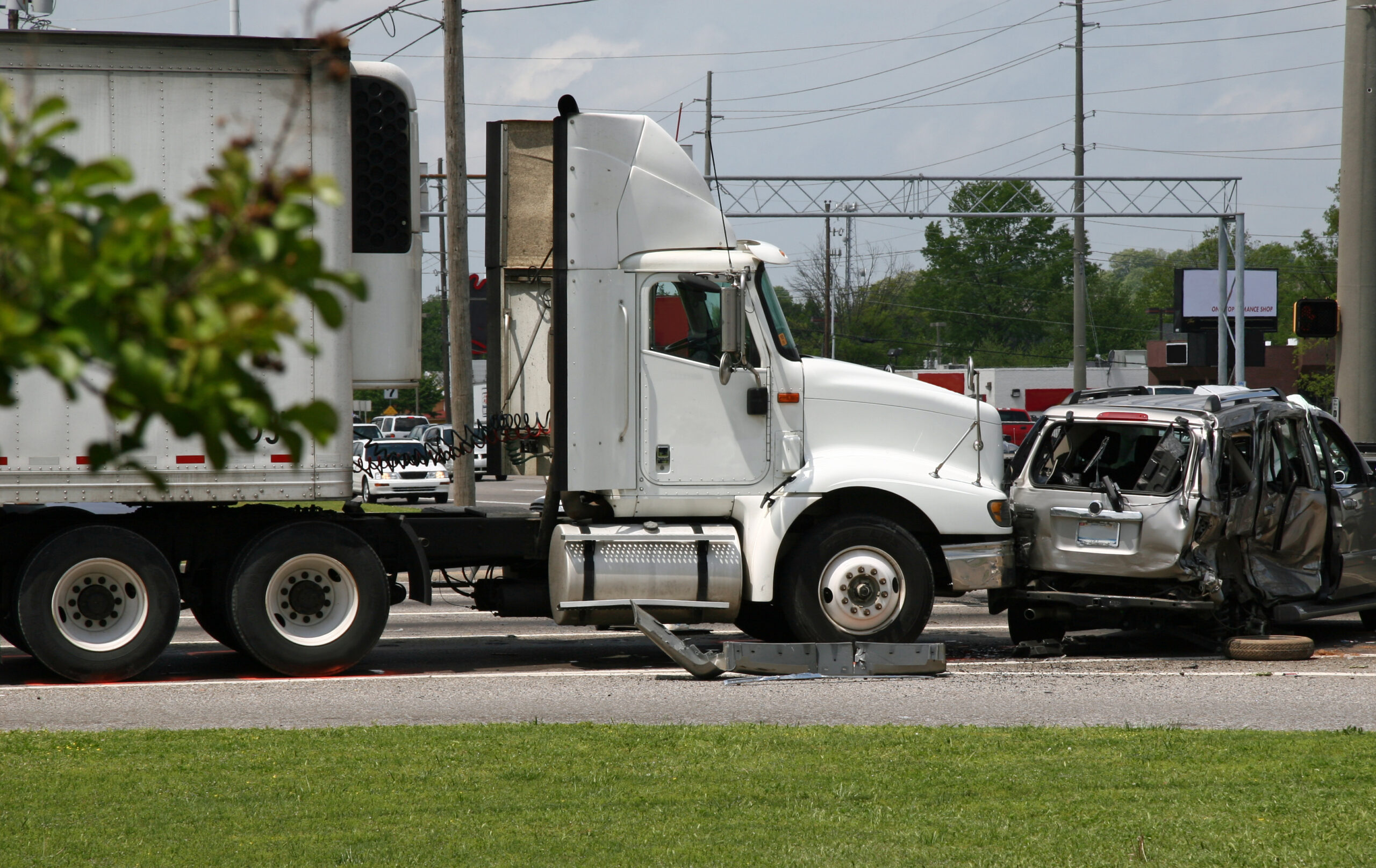
According to a report, “Overview of Motor Vehicle Traffic Crashes in 2024” from the National Highway Traffic Safety Administration (NHTSA), 5,340 people were killed in traffic crashes involving large trucks in 2024. While that represents a 2.5% decrease from 2023, the number remains significant.
Even more concerning, an estimated 161,201 people were injured in crashes involving large trucks in 2024, a 5% increase from the previous year. These figures include all people killed or injured in crashes involving large trucks, not just the truck drivers.
What This Means for Employers
Although fatalities decreased, the rise in injuries demonstrates that commercial truck safety remains a major concern.
For employers, a serious collision can result in:
- Increased insurance claims and potential premium increases
- Workers’ compensation expenses and employee downtime
- Vehicle repairs or replacement costs
- Legal liability and regulatory investigations
- Disrupted deliveries and customer dissatisfaction
- Long-term damage to a company’s reputation
A proactive safety program should focus on preventing fatal and nonfatal crashes. Tracking near misses, unsafe driving behaviors, and minor incidents among drivers can help employers identify risks before they cause a serious accident.
2. Driving Too Fast for Road Conditions is Key Contributor to Accidents
Physics tells us that force equals mass times acceleration (F=MA). When it comes to commercial trucks, their substantial mass means that slowing down or stopping requires significant force. Compared with passenger vehicles, large trucks generally require much greater stopping distances, making speed management and awareness of road conditions critical to safe operation.
The Federal Motor Carrier Safety Administration (FMCSA) and the National Highway Traffic Safety Administration (NHTSA) conducted the Large Truck Crash Causation Study. According to the study, approximately 23% of the large trucks involved in the serious crashes examined were traveling too fast for road conditions.
Furthermore, trucks for which this factor was recorded were substantially more likely to be assigned the critical reason for a crash than trucks for which it was not recorded. The takeaway is clear: a truck’s mass is a matter of physics, but managing speed for road conditions is a matter of driver responsibility.
What This Means for Employers
Speed-related accidents are not always caused by drivers intentionally exceeding posted speed limits. Driving too fast for road conditions—particularly during rain, snow, heavy traffic, or reduced visibility—is a large culprit.
Employers can reduce these risks by:
- Providing defensive driving and speed-management training
- Establishing realistic delivery schedules that don’t reward speeding
- Using telematics to identify excessive speeding and harsh braking
- Training drivers to adjust speed for weather, traffic, and road conditions
- Coaching drivers who demonstrate repeated high-risk behaviors
Speed management can help reduce collision risk, protect equipment, and potentially lower expenses related to fuel consumption, vehicle wear, and insurance claims.
If this topic is of importance for your organization, join Ancora Training and industry professionals on Nov. 4 for a webinar, “Weathering the Risk: Winter Safety in the Workplace & on the Road.” Register now to take proactive measures before the weather has a negative impact on your operation.
3. Driver Fatigue Was Associated With 13% of Trucks in a Major Crash
Long hours, irregular schedules, overnight routes, and insufficient rest can contribute to driver fatigue. The FMCSA’s Large Truck Crash Causation Study identified driver fatigue as an associated factor for approximately 13% of the large trucks involved in the serious crashes studied.
The same study identified work pressure from motor carriers as another relevant factor—associated with 10% of the accidents—highlighting how operational decisions can influence driver safety.
What This Means for Employers
Fatigue affects more than a driver’s ability to stay awake. It can reduce reaction time, impair judgment, and make it harder to recognize changing road conditions. Employers should take steps to ensure that productivity expectations don’t unintentionally encourage unsafe driving.
Effective fatigue-management strategies include:
- Maintaining compliance with FMCSA’s federal Hours of Service regulations
- Building adequate rest periods into delivery schedules
- Educating drivers about fatigue warning signs
- Encouraging employees to report fatigue without fear of retaliation
- Reviewing routes and schedules that regularly create excessive time pressure
- Maintaining overall driver fitness and lifestyle as they relate to their role
Fatigue prevention requires both driver education and management support. Even experienced drivers can become unsafe when operating under demanding schedules without adequate rest.
4. Brake Problems Were Associated With 29% of Trucks in a Major Crash
Vehicle maintenance is another critical component of commercial truck safety. In the FMCSA’s Large Truck Crash Causation Study, brake problems were identified as an associated factor in approximately 29% of the large trucks involved in serious crashes.
Brake-related issues included mechanical failures and brakes that were improperly adjusted. These findings do not establish that brake problems caused 29% of crashes, but they demonstrate the importance of preventive maintenance.
Proper entry-level driver training establishes a strong foundation for a safe and successful career. It goes beyond preparing students to pass the skills test and earn their CDL; it equips them with the knowledge, skills, and professional behaviors necessary to develop safe and compliant work habits that endure throughout their careers on the road.
What This Means for Employers
A poorly maintained tractor-trailer creates hazards that even the most experienced driver may struggle to overcome. Employers should implement a preventive maintenance program that includes routine brake inspections, tire checks, lighting inspections, and timely repairs.
Drivers also need training to recognize mechanical warning signs and properly perform required vehicle inspections. Proactive maintenance helps prevent costly roadside breakdowns, out-of-service violations, and crashes while protecting the company’s investment in its vehicles and equipment.
5. Most People Killed in Large Truck Crashes are Not Truck Occupants
Commercial truck safety affects everyone sharing the road. According to NHTSA’s 2024 large-truck crash statistics, 70% of people killed in crashes involving large trucks were occupants of other vehicles.
This highlights the potentially devastating consequences of collisions involving heavy commercial vehicles.
What This Means for Employers
Because of their size, weight, and limited maneuverability, large trucks require specialized operating skills. Defensive driving training protects employees, customers, and the public while helping organizations reduce their liability exposure.
Employers should prioritize training in:
- Maintaining safe following distances
- Recognizing blind spots
- Managing intersections and turns
- Anticipating the actions of passenger vehicles
- Navigating congested roads and work zones
- Responding to emergencies
6. Safety Violations Can Affect a Carrier’s Record for 24 Months
Truck driver safety also is directly connected to a company’s regulatory standing. The FMCSA’s Compliance, Safety, Accountability (CSA) program uses its Safety Measurement System to analyze crash reports, roadside inspections, and safety violations. The system considers 24 months of performance data when identifying carriers for potential safety interventions.
What This Means for Employers
Safety violations can have consequences long after an incident occurs. A pattern of repeated violations or a concerning crash history may lead to increased regulatory scrutiny and raise questions about a company’s overall safety performance.
Insurers may also consider a company’s claims history, driver records, fleet characteristics, and safety practices when evaluating coverage and premiums. While strong safety practices can support a more favorable risk assessment, improved safety performance does not guarantee lower insurance rates.
Regulatory enforcement in the commercial driver training industry also underscores the importance of safety and compliance. On August 31, 2026, the U.S. Department of Transportation (DOT) announced the closure of 110 commercial driver’s license (CDL) schools across 23 states citing concerns involving more than 5,000 CDL drivers who failed English language proficiency tests. The action followed an announcement in July that the DOT and Department of Homeland Security would work together to address fraudulent practices at CDL schools nationwide.
To learn more about why this impacts truck driver safety, read our blog, “Why English Language Proficiency Certification is Paramount for CDL Safety.”
For employers, maintaining a strong safety record requires ongoing attention. Regularly reviewing safety data, identifying trends, and addressing recurring issues through targeted coaching and training can help reduce risk. Combined with consistent driver training, preventive vehicle maintenance, and effective compliance management, these efforts can help protect a company’s reputation and support more favorable risk assessments.
7. Motor Vehicle Crashes Cost U.S. Employers $62 Billion Annually
Protecting drivers and the public must always come first. But motor vehicle crashes also carry significant financial consequences for businesses—costs that extend far beyond the initial incident.
According to the Network of Employers for Traffic Safety’s 2026 report, “Cost of Motor Vehicle Crashes to Employers: Latest Available Estimates and Key Findings,” motor vehicle crashes cost U.S. employers an estimated $62 billion annually in direct crash-related expenses, which include medical care, liability, lost productivity, and property damage.
Although this figure encompasses crashes involving all types of motor vehicles, commercial trucking companies face many of the same risks. When a truck is involved in a crash, the company may lose the use of a revenue-generating vehicle while repairs are underway, compounding the financial impact through operational disruptions and lost revenue.
What This Means for Employers
Consider the operational consequences when a truck is decommissioned following an accident: the business may need to locate replacement vehicles, reassign drivers, delay shipments, or pay overtime to fulfill customer commitments.
Even when insurance covers some of the direct expenses, employers may still be responsible for deductibles, uncovered losses, and increased premiums at renewal.
Employers can better understand their exposure by tracking:
- Total crash-related expenses, including indirect costs
- Insurance claims and deductibles
- Vehicle downtime following accidents
- Maintenance and repair expenses
- Driver training costs compared with incident trends
Safety improvements should be evaluated as investments in operational efficiency and financial stability, not simply as compliance expenses.
Turn Truck Driver Safety Statistics into a Stronger Safety Program
Understanding national accident statistics is the starting point. The real value comes from applying that information to your fleet. Employers can begin by establishing measurable safety goals and reviewing their performance regularly.
Examples of measurable safety goals include:
- Preventable accidents per million miles
- Speeding and harsh-braking events
- Hours of service violations
- Vehicle inspection defects
- Insurance claims and losses
- Driver training completion
When companies track this data, they can identify opportunities for improvement, not simply penalize drivers. A successful safety program combines clear expectations, employee support, ongoing education, and accountability.
Ancora Training Training Can Help Employers Reduce Risk
One of the most valuable investments an employer can make is ensuring that commercial drivers receive comprehensive, practical training. Professional CDL training provides drivers with the foundational knowledge and hands-on experience needed to operate commercial vehicles safely.
Ancora Training works with businesses nationwide to deliver CDL workforce development solutions designed to support their hiring, training, and operational needs. Through a combination of classroom instruction and hands-on training, Ancora helps organizations prepare drivers for the responsibilities of commercial vehicle operation.
Depending on an employer’s needs, training partnerships can support:
- Developing a pipeline of qualified CDL drivers
- Preparing new drivers with foundational operating and safety skills
- Supporting compliance with applicable entry-level driver training requirements
- Creating more consistent workforce training processes
- Reducing the burden on internal training resources
While no training program can eliminate every accident or guarantee insurance savings, investing in driver preparedness is an important part of a comprehensive risk-management strategy.
Ready to strengthen your commercial driving workforce? Explore our Corporate CDL Training Programs or book a consultation to discuss your organization’s CDL training needs.