


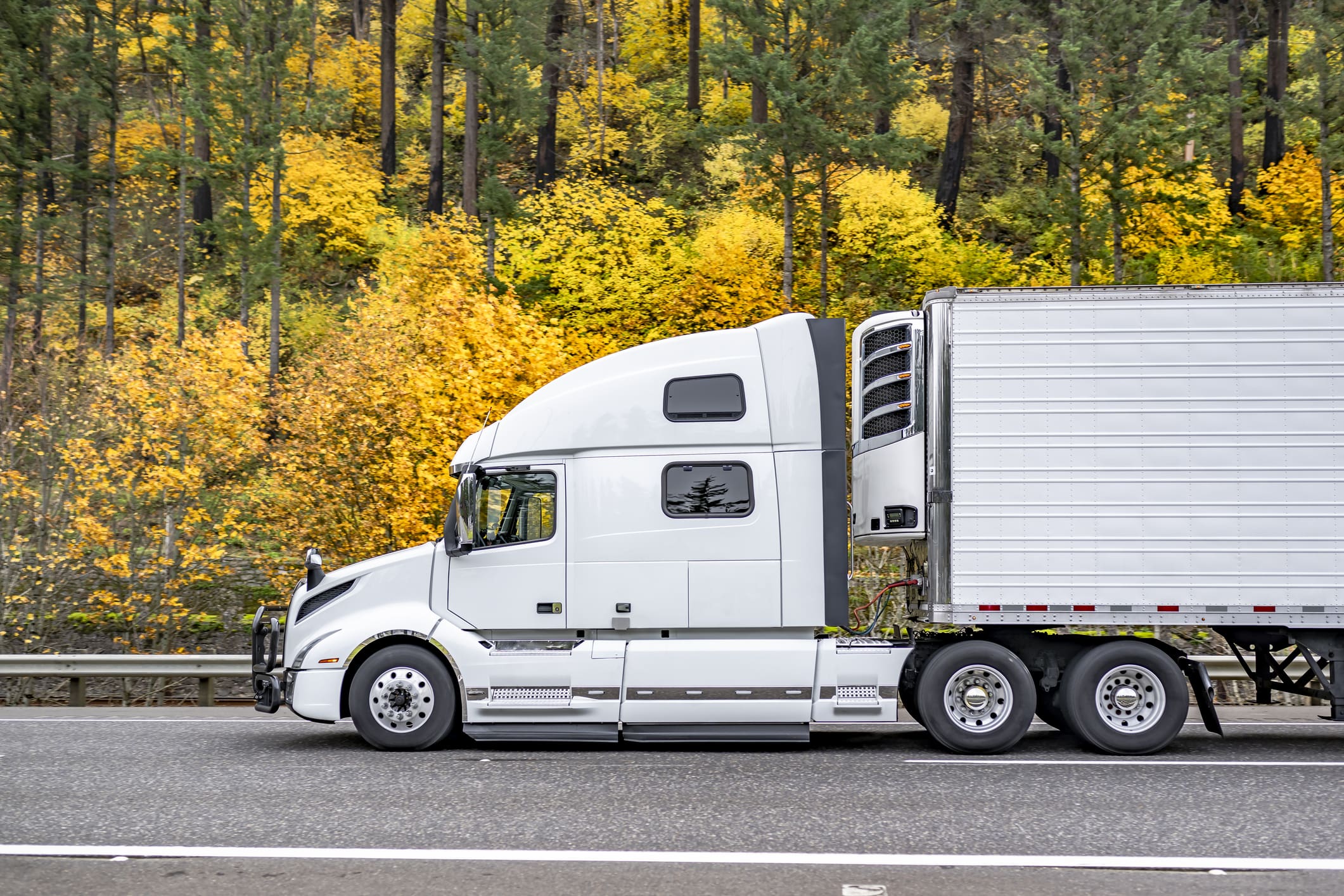
Increasing Demand for Reefer Drivers (and Why Outsourced Training is the Smartest Move)
Whether you’re an owner-operator of a large trucking company or a manager of a small fleet, you know not all freight is created equal. Some loads are easy to cover. Others take time, coordination, and the right driver behind the wheel.
Often, the loads that are hardest to staff are also the ones with the best margins: like refrigerated freight. According to Grand View Research, the U.S. cold chain market size was valued at $72.99 billion in 2023, and is projected to grow at a rate of 14.5% compound annual rate from 2024 to 2030. Growth is being driven by factors like increased automation of refrigerated warehouses, rising demand for fresh food, expanding e-commerce, greater investment in cold chain infrastructure, and government initiatives to minimize food waste.
As demand for cold chain logistics grows, so does the opportunity for trucking companies equipped to handle it. Industries like grocery distribution, food service, and pharmaceutical transport all rely on skilled refrigerated truck drivers to keep products safe and compliant.
The challenge is that many small fleets aren’t fully positioned to take advantage of this opportunity.
Refrigerated Truck Driver Training Is Now a Business Necessity
It’s easy to assume that expanding into refrigerated freight is as simple as adding the right equipment. In reality, it requires building the right capabilities. Without proper reefer driver training, even experienced CDL drivers can struggle with the demands of temperature-controlled loads. Unlike dry van freight, reefer hauling freight isn’t hands-off; it requires constant attention and active management from pickup to delivery. Drivers must monitor and adjust temperatures, understand how different types of freight respond to environmental changes, and respond quickly when issues arrive.
When something does go wrong, it’s rarely just a minor delay. More often, it leads to a rejected load, lost revenue, and potential damage to your reputation. For owner-operators, that kind of risk can have a direct and immediate impact on your business.
The Driver Shortage is Even Tighter with Refrigerated Loads
The trucking industry is already dealing with a well-documented shortage of qualified drivers. According to CNN, Chris Spear, the President and CEO of the American Trucking Association, said the trucking industry is short 80,000 drivers, which is a record high. This is with the industry already employing 3.58 million professional truck drivers of all types in 2024.
Yes, there are numerous CDL holders nationwide. However, the number of those who are unqualified is the concern. Reasons for being unqualified include having a prohibited status on the drug and alcohol clearinghouse (commonly due to recreational marijuana use), English language proficiency enforcements, and non-domicile statuses to name a few. The increased demand to move freight coupled with these disqualifications is what is driving the shortage.
Additionally, not every CDL driver is trained or willing to handle reefer loads, so that shortage may be even more pronounced in the refrigerated freight sector.
Drivers with refrigerated freight experience are in higher demand, which can drive up pay expectations and intensifies competition among carriers for qualified drivers. For small fleets, competing for that limited talent pool can quickly become unsustainable. That’s why more companies are shifting their strategy from hiring experience to developing it from within.
Training Your Existing Drivers is the Fastest Path to Growth
Instead of chasing a shrinking pool of experienced reefer drivers, many successful owner-operators are investing in CDL reefer training for the team they already have. It’s a practical, cost-effective strategy. Your drivers already understand your operation, routes, and expectations because you’ve already invested time and resources in their onboarding process. With the right training, they can transition into refrigerated freight more efficiently than a new hire.
This approach helps you:
- Expand into higher-paying freight
- Improve driver retention
- Reduce recruiting costs
- Build a more reliable operation
That said, there are some approaches that deliver far better results than others.
Handling Reefer Training In-House vs Outsourcing
In-House Reefer Driver Training
Many small fleets attempt to create their own trucking company driver training programs.
On the surface, it makes sense: no one knows your operation better than you. But reefer training requires more than basic instruction. It involves compliance knowledge, equipment expertise, and real-world application that go beyond a quick walkthrough or ride-along.
Reefer training certification includes the following:
- A valid CDL
- A state-specific exam that covers temperature-controlled operation, temperature monitoring, and cargo handling
- Possible specialized certification courses related to the Food Safety Modernization Act
- Potential need for Hazardous Materials (H Endorsement) and Tanker (N or X Endorsements).
Without a structured program to thoroughly cover these areas, training can become inconsistent, and inconsistency can lead to costly mistakes.
Outsourced Reefer Driver Training
If the list of requirements above sounds daunting, outsourcing your reefer training can be a practical alternative. Partnering with a professional CDL training provider like Ancora Training gives your business immediate access to expertise, structure, and scalability. Instead of building a program from scratch, you can rely on a proven system designed specifically for cold chain logistics drivers.
With Ancora’s outsourced reefer driver training, your team gains:
Stronger Refrigerated Truck Fundamentals: Drivers are taught how to properly operate reefer units, manage temperature-sensitive loads, and prevent costly errors.
Hands-on Experience: Training includes real-world application, so drivers are prepared before they’re responsible for live freight.
Consistent Results: Every driver goes through the same training process, reducing variability across your fleet.
Faster Ramp-up Time: What could take months to develop internally can be accomplished much more efficiently through a dedicated training partner.
Confidence In Your Drivers: When your driver is hauling a high-value refrigerated load, you know they’ve been trained to handle it.
Ready to Build Your Reefer Driver Pipeline?
The demand for refrigerated freight isn’t slowing down. If anything, it’s becoming a bigger part of the logistics landscape. The real question isn’t whether to expand into reefer, but how to do it effectively. Outsourcing CDL reefer training with Ancora Training offers you a direct, reliable path forward.
If you’re looking to expand into refrigerated freight or strengthen your current operation, investing in reefer driver training is the next step. Partnering with Ancora Training, a trusted CDL training provider, can help you upskill your drivers, reduce risk, and position your company for long-term growth in the cold chain.
Schedule a consultation today.
Tags: CDL training, reefer drivers